Bischoff Textil · St. Gallen
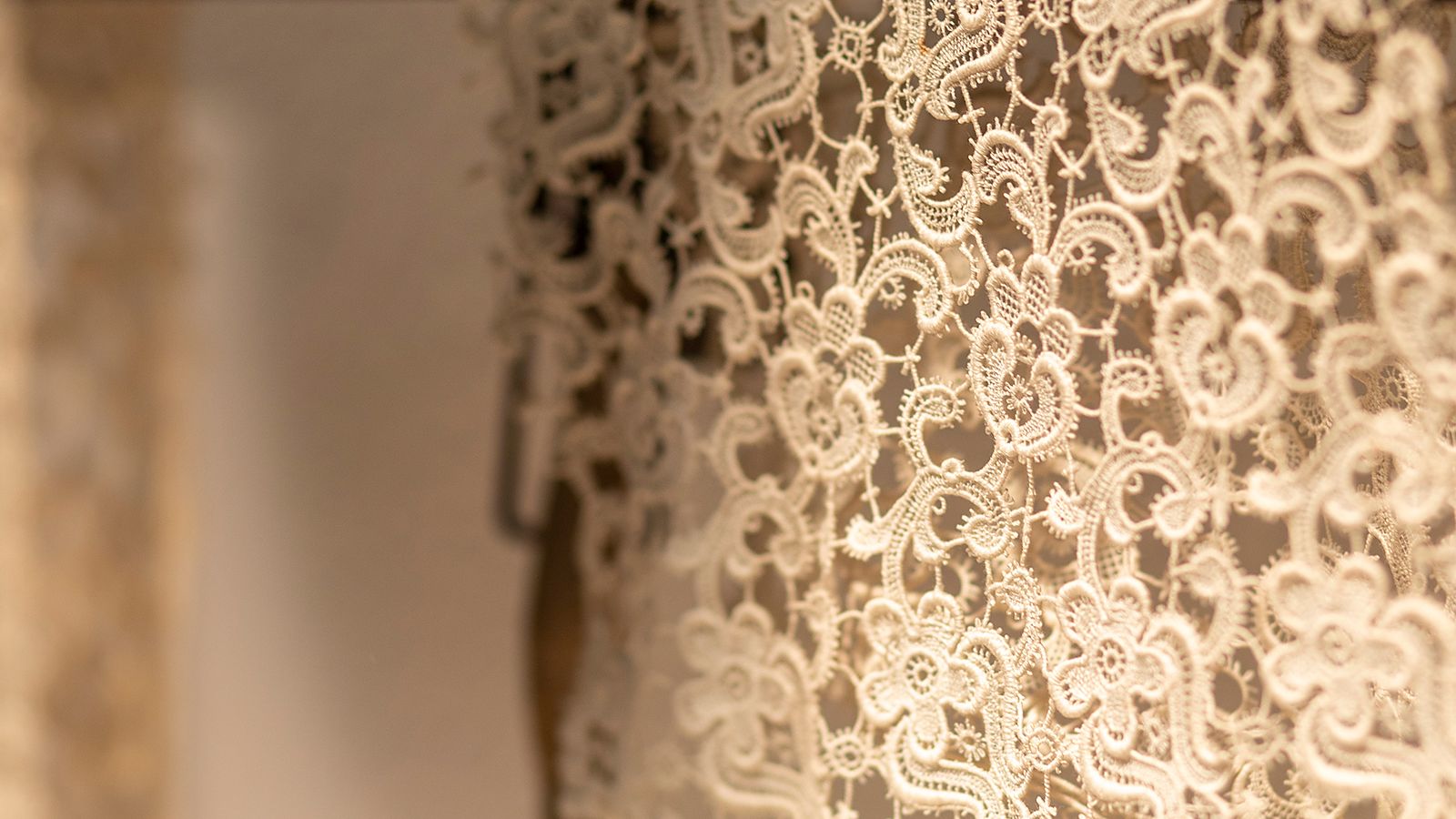
Bischoff has been embroidering in St. Gallen since 1927.
For fashion, for medicine, for technical textiles. And keeping what this industry would otherwise have forgotten.
For fashion, for medicine, for technical textiles. And keeping what this industry would otherwise have forgotten.
Three doors, one house: embroidery for fashion, embroidery for medicine and technical textiles — and the archive of an entire industry.
On Bogenstrasse in St. Gallen they sit side by side. One body of work ends up in lingerie and womenswear, the other in medical products and technical textiles. What remains of both is kept in the same building, in pattern books.
Bischoff Textil grew out of an embroidery export business in 1927. The name became a byword for fine embroidery in the fashion world. The work stayed; a plant in Diepoldsau, a joint venture in Thailand and property in the canton of St. Gallen came later.

One house, three addresses: the fashion market, medicine and technical textiles, the collection.
 01
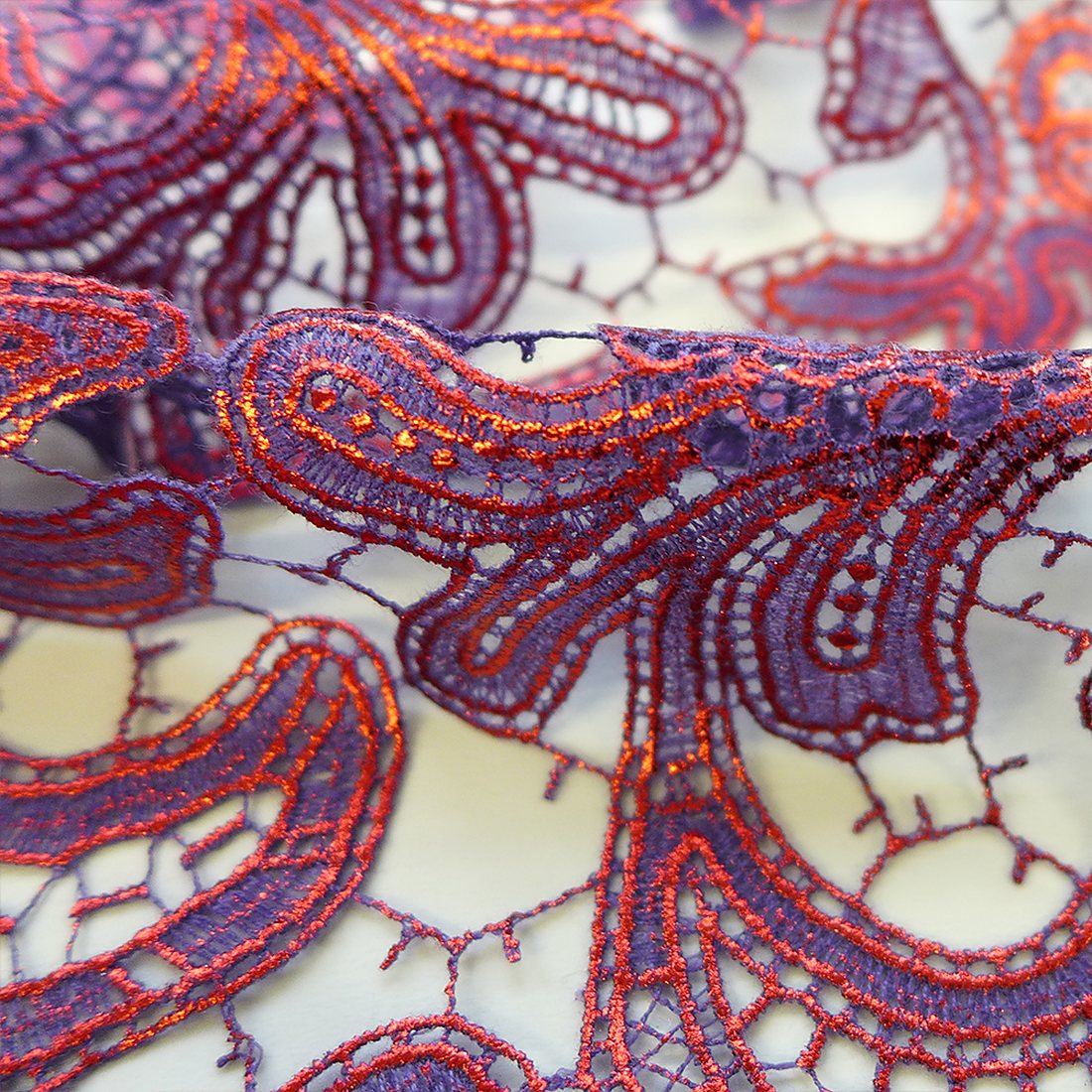
Bischoff Gamma (Thailand) Ltd. designs and produces exclusive embroidery for the international fashion market. The Bischoff Gamma brand is valued worldwide by well-known labels in the lingerie and womenswear industry; sales and distribution sit with Bischoff Gamma.
Over 30 years in Thailand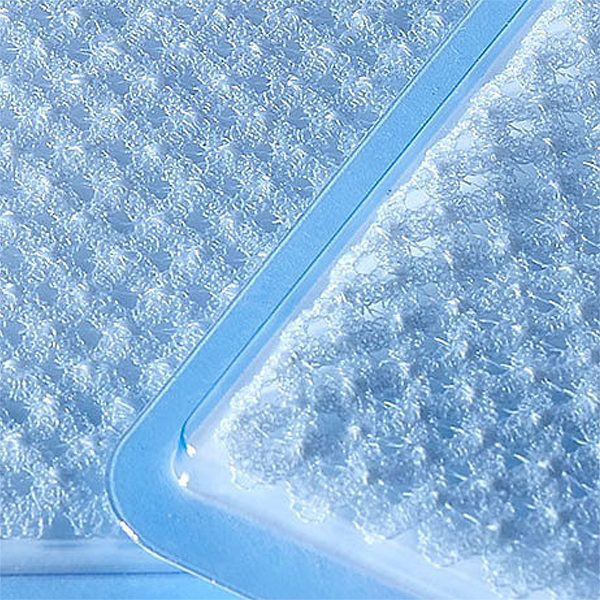 02
The Diepoldsau plant produces embroidery for medical products and technical textiles. For Empa, Bischoff develops light-conducting fibres for wearables. And it makes its capacity available to other suppliers as a contract embroiderer.
One plant in Switzerland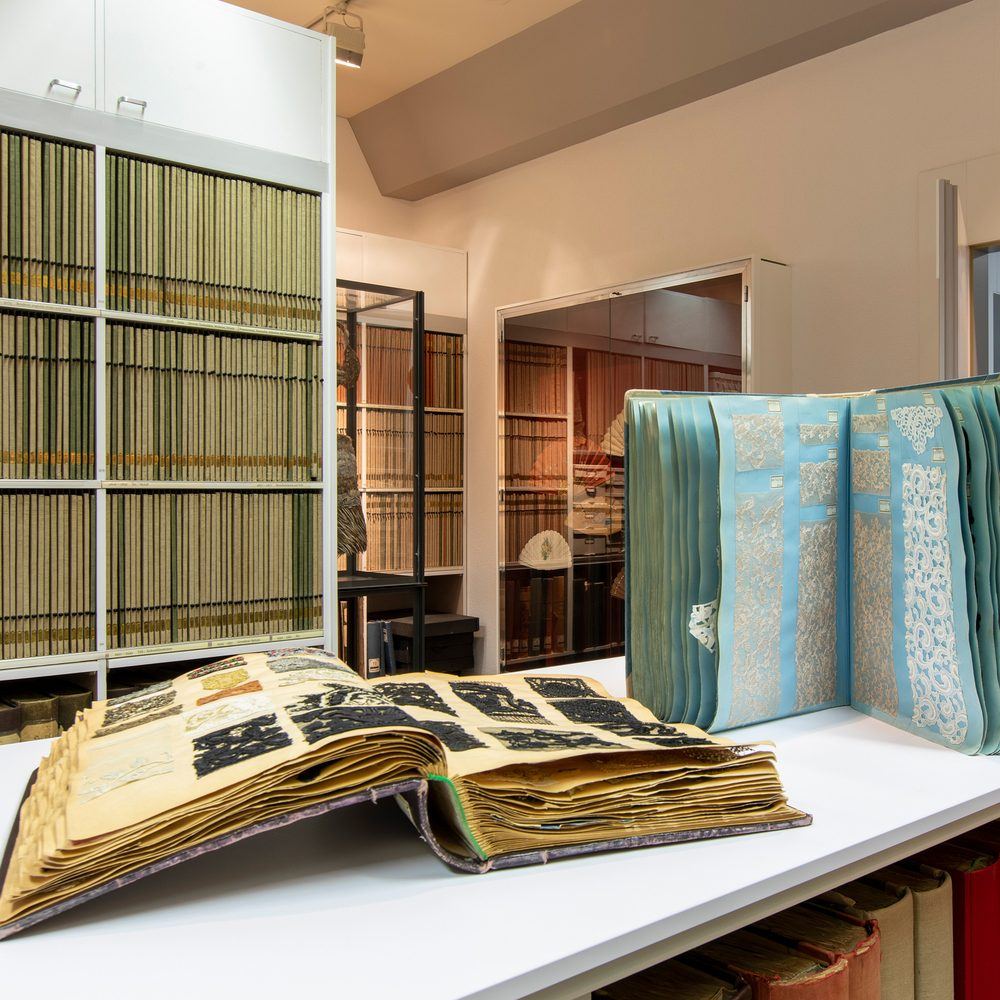 03
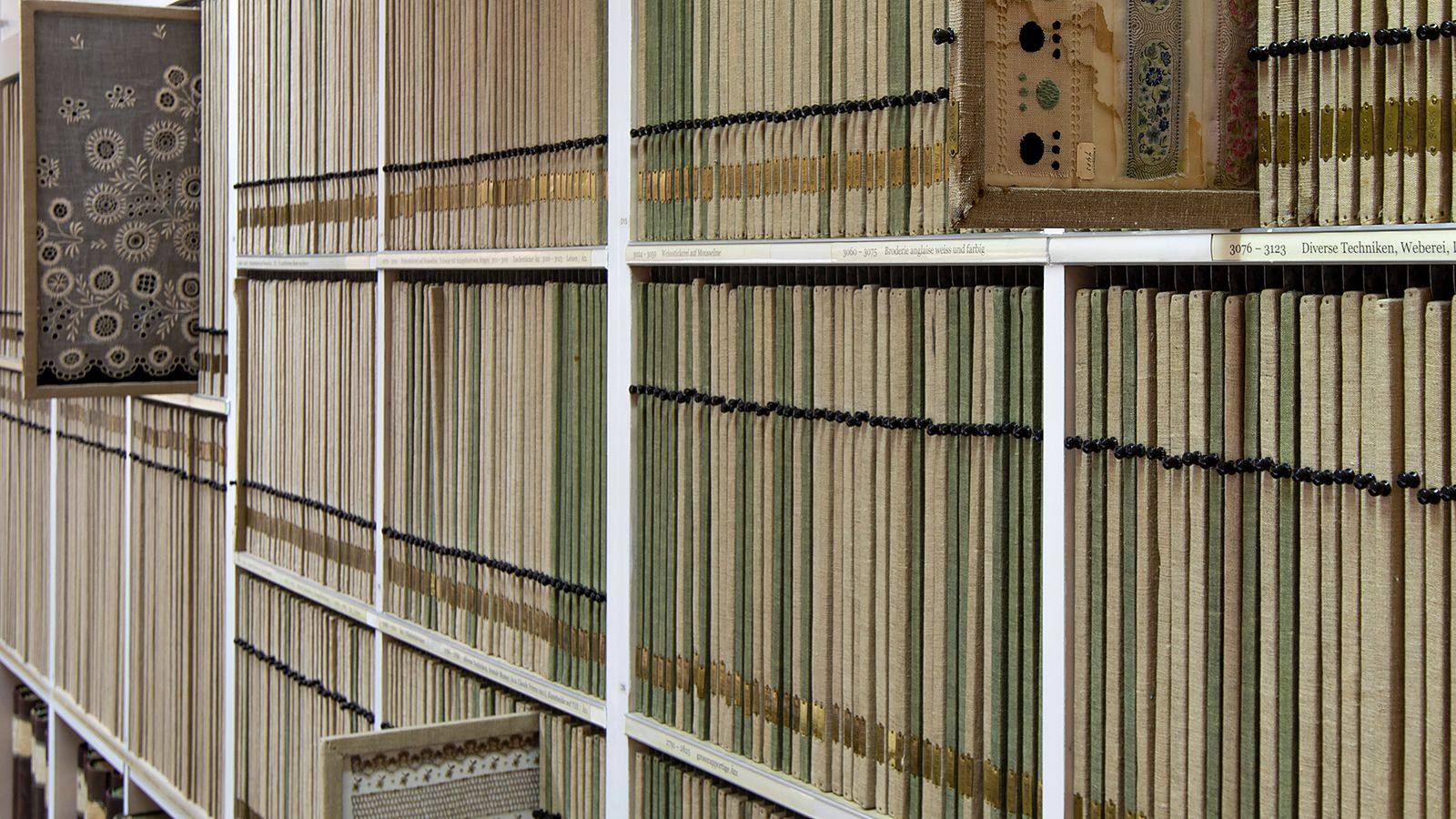
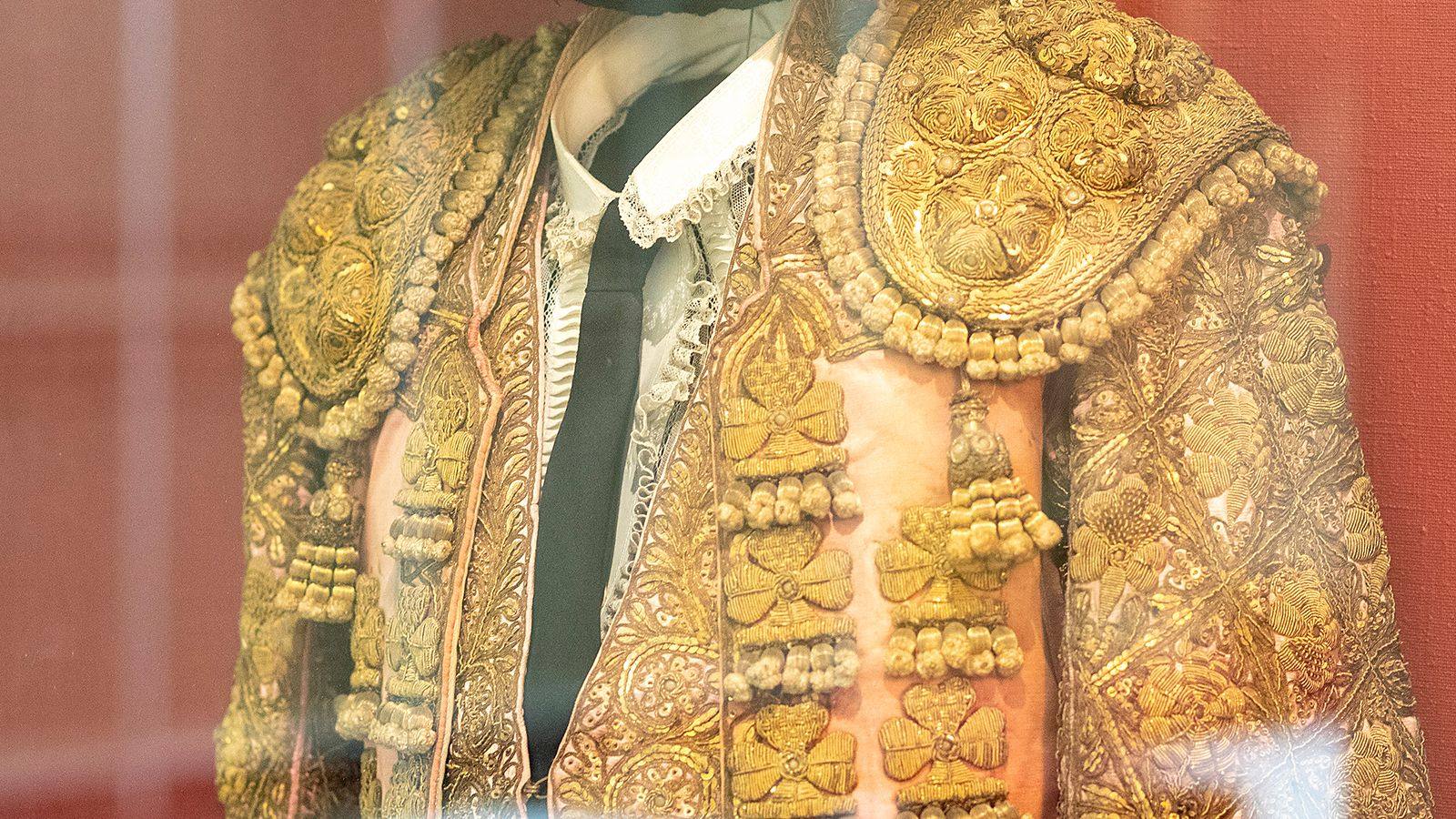
At the head office lies the world's largest private collection of historic embroidery: pattern books, individual pieces, estates of other eastern Swiss companies. It serves the design team as a source. It opens on request, for selected groups of visitors.
Open on requestThe dates come from the company's own history, the commercial register and the press.
Otto Bischoff takes over the embroidery export business Theodor Loepfe & Co. and renames it Bischoff Hungerbühler & Co.
After a merger the company becomes Bischoff & Müller. Embroidery for lingerie grows sharply in importance.
The company takes its present name. In the fashion world, the name becomes a byword for fine embroidery.
Swiss production is concentrated in Diepoldsau and the Kronbühl plant closes. Around 260 people work in eastern Switzerland at the time.
The Goldener Schemel award from Heimatschutz SG/AI recognises the care taken with the high-rise on Bogenstrasse.
The articles of association name the acquisition, development and management of property as an explicit corporate purpose.
Princess Maha Chakri Sirindhorn visits the collection. The 45 minutes planned become more than two hours.
The collection holds objects from the company's own history and from the estates and archives of other former embroidery businesses in eastern Switzerland. The pattern books and individual pieces are not museum pieces: they serve the design team as a source of inspiration.
On request, Bischoff opens the museum to selected groups of visitors.
Move the pointer over the plate to magnify the weave.
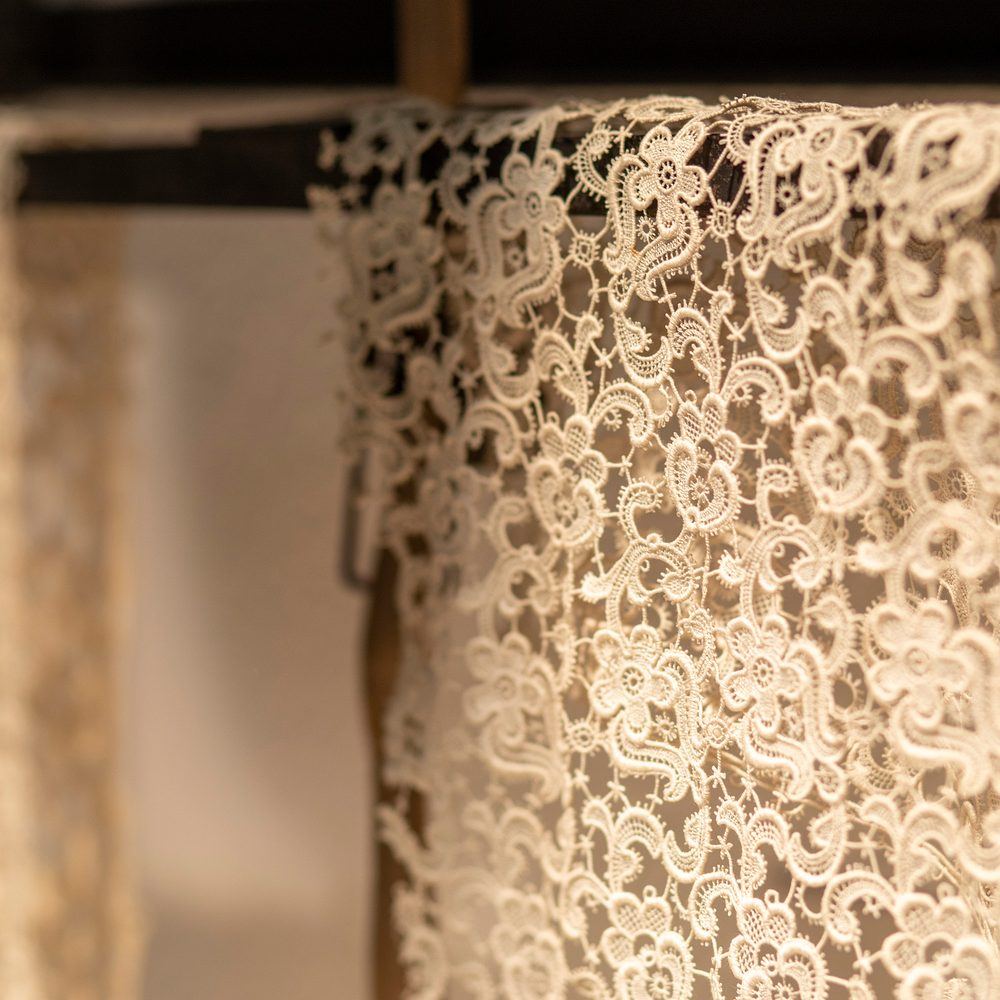
Switzerland works precisely and in small series. Thailand works at volume for fashion. Both belong to the same house.
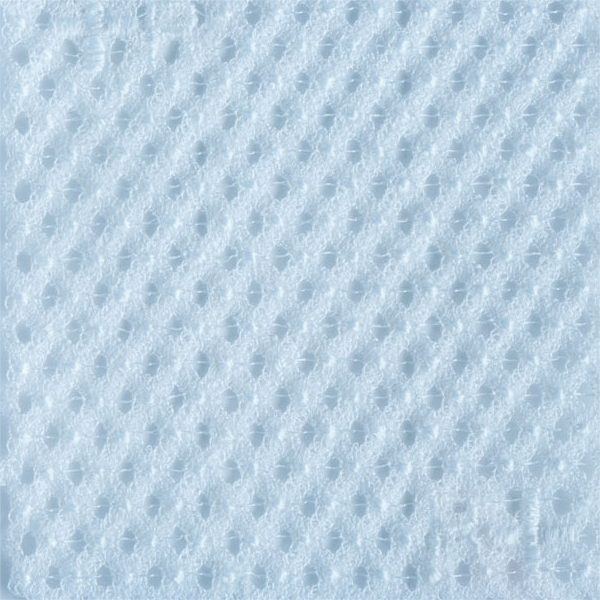
The Diepoldsau plant concentrates on embroidery for medical products and technical textiles. Individual fashion customers are still served here too. A modern machine park and the know-how of its staff are also made available to other suppliers as a contract embroiderer.

Bischoff Gamma (Thailand) Ltd. is a joint venture with Gamma Textile Mfg. Co., Ltd. It designs and produces embroidery for the international fashion market and is responsible for worldwide sales.
Bischoff lets offices, commercial space and flats, exclusively in the canton of St. Gallen, mainly around the head office, as well as in Wittenbach and Diepoldsau. Its own property team looks after management and upkeep. Many tenancies have lasted for years.
In 1869 the Aktienstickerei Kronbühl built on Arbonerstrasse; in 1902 Leumann, Boesch & Co. took over, and production continued there until 1980. Bischoff bought the site in the mid-1980s and embroidered there itself for almost twenty years. The first phase is complete: the blue building of 1869 has been renewed, 71 parking spaces lie beneath it, and ALDI SUISSE and a group medical practice have moved in. Phases two and three are being planned.

Alti Stickerei, Wittenbach: built in 1869, embroidered until 1980, in new use since 2024.
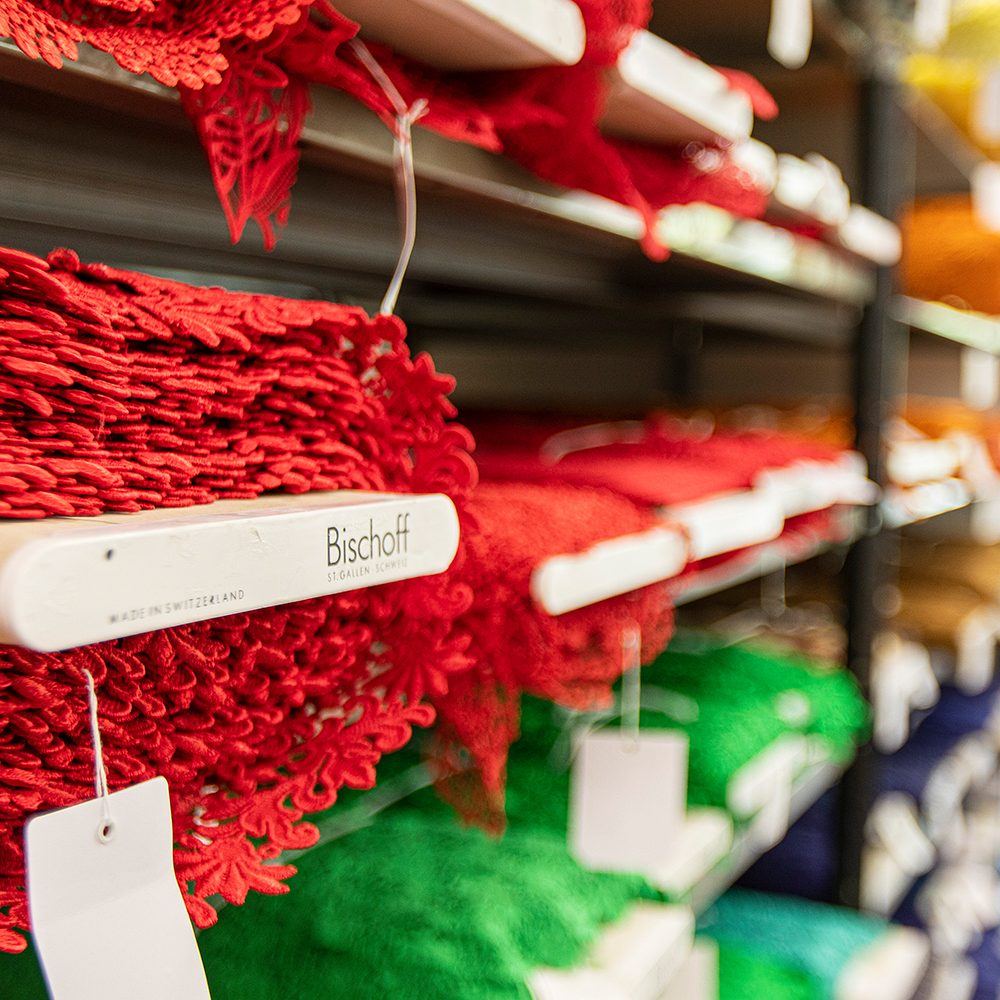
The factory shop on Bogenstrasse carries embroidery of every kind, fabrics, tea towels, curtain fabric, handkerchiefs and gifts. The online shop offers allover, gallon, band and motif embroidery, along with silk, tulle, wool, cotton and haberdashery — made in the Swiss plant.
Traders and wholesalers are asked to arrange an appointment in advance.
In the same year, three things come up for decision: the second and third phase of Alti Stickerei, the role of a collection that is today accessible only on request, and the question of how much fashion volume a Swiss precision embroiderer wants to carry.
A house that owns its archive, its machines and its ground can answer those questions differently from anyone else.
It only has to decide which story it wants to tell for the next hundred years.
This page is a proposal to Bischoff Textil AG, made from its publicly available material. The three forms of collaboration — from the flat fee of CHF 1,200.– to the supporting materials — are set out on a separate page.
See the terms